The Scientific Elegance of Sanskrit: Nurturing Inner Growth and Linguistic Heritage


Sanskrit, often hailed as the “mother of all languages,” is not just a means of communication but a profound vehicle for intellectual and spiritual evolution. Its intricate structure, phonetic precision, and grammatical depth have earned it the title of the most scientific language. Beyond its linguistic significance, enchanting Sanskrit mantras and texts have been revered for their ability to foster inner growth and spiritual awakening. In this article, we will explore the scientific underpinnings of Sanskrit, its role as the foundation for many languages, and its transformative power on the human psyche.

The Scientific Foundations of Sanskrit

Sanskrit’s scientific nature lies in its meticulous grammar, phonetics, and syntax. Its alphabet is systematically organized based on the articulatory features of human speech sounds. The pronunciation of each letter is designed to resonate with specific energy centers in the body, known as “chakras.” This phonetic precision is evident in the precise enunciation required to correctly pronounce Sanskrit words and phrases. Such phonetic depth aids in the correct recitation of ancient texts and mantras, ensuring that their vibrations have the desired impact on the practitioner.

Furthermore, Panini’s “Ashtadhyayi,” a comprehensive treatise on Sanskrit grammar, laid the foundation for modern linguistic theories. His analysis of the language’s structure and rules remains unparalleled in its sophistication. The concept of “sandhi” (combination of sounds) in Sanskrit grammar has parallels in modern linguistic phenomena. The language’s capacity to convey intricate meanings with conciseness is a testament to its logical structure.

The Source of Linguistic Lineage

Sanskrit’s influence extends beyond its own realm; it has played a crucial role in shaping several languages. Many Indo-European languages share common roots with Sanskrit, indicating its significant role in linguistic evolution. Languages such as Hindi, Bengali, Marathi, and even English have borrowed extensively from Sanskrit, enriching their vocabulary and linguistic expressions. The pan-Indian and global linguistic heritage is intrinsically tied to the deep wellspring of Sanskrit.

Inner Growth through Enchanting Sanskrit

Beyond its linguistic prowess, Sanskrit holds transformative potential for inner growth. The recitation of Sanskrit mantras and scriptures has been an integral part of spiritual practices across various traditions. The resonant vibrations produced by chanting Sanskrit syllables have a profound impact on the human mind and body. Scientific studies have shown that Sanskrit chanting stimulates the vagus nerve, inducing a state of calmness and reducing stress. The rhythm, tone, and pronunciation during recitation create a harmonious symphony that aligns the individual with cosmic energies.

Ancient texts like the Vedas, Upanishads, and Bhagavad Gita, written in Sanskrit, delve into the depths of human existence, exploring questions of purpose, reality, and consciousness. These texts are not mere literature; they are pathways to higher understanding. The act of deciphering the layered meanings of Sanskrit verses fosters intellectual growth and contemplative wisdom. The language’s complexity necessitates a keen focus, honing concentration and mental agility.

Sanskrit’s Influence on Modern Thought

Sanskrit’s relevance goes beyond spiritual practices. It has a significant presence in modern science and technology. Linguists have drawn parallels between the binary nature of Sanskrit syllables and modern computer coding, revealing an unexpected bridge between ancient language and contemporary innovation. The logical arrangement of linguistic elements in Sanskrit mirrors the organizational principles of computer programming languages.

Furthermore, Ayurveda, the ancient Indian system of medicine, has its roots deeply embedded in Sanskrit texts. The precise description of herbs, diseases, and treatments in Sanskrit has laid the foundation for holistic healing practices that continue to be embraced worldwide.

Preserving Sanskrit: A Cultural Imperative

In a rapidly globalizing world, preserving Sanskrit is not just a cultural endeavor, but a necessity to safeguard the richness of human heritage. Initiatives to teach and learn Sanskrit are gaining momentum, recognizing its significance in fostering cognitive abilities, linguistic exploration, and a deep connection to ancient wisdom. By understanding and studying Sanskrit, individuals can unravel the intricate tapestry of Indian philosophy, literature, and scientific thought.


Sanskrit’s legacy as a scientific language and the mother of languages is indisputable. Its phonetic precision, grammatical complexity, and linguistic influence have left an indelible mark on human civilization. However, its impact transcends linguistics; enchanting Sanskrit mantras and texts possess the power to ignite inner growth and spiritual awakening. As we navigate the modern world, embracing Sanskrit is not just a nod to our past, but a step toward a more harmonious, enriched, and evolved future.


The Transformative Power of Yoga: Activating Chakras for Holistic Wellness


In the pursuit of holistic wellness, individuals are increasingly turning to ancient practices that have stood the test of time. Among these practices, yoga emerges as a powerful tool for not only enhancing physical flexibility and strength but also for fostering mental clarity and emotional balance. Central to the yogic philosophy is the concept of chakras, the energy centers that are believed to govern various aspects of our being. In this article, we will delve into the significance of yoga in activating and balancing these chakras, exploring how this practice can lead to a harmonious integration of the mind, body, and spirit.

Understanding Chakras

Chakras, a term originating from Sanskrit, can be understood as spinning wheels or vortexes of energy that exist within the subtle body. There are seven main chakras, each located along the spine, from the base to the crown of the head. These energy centers are thought to correspond to different physical, emotional, and spiritual dimensions of human experience. When chakras are in balance and harmoniously aligned, one experiences a sense of well-being, vitality, and emotional stability. However, imbalances in these energy centers can lead to physical ailments, emotional disturbances, and a general sense of unease.

Yoga: A Pathway to Chakra Activation

Yoga, a comprehensive system that encompasses physical postures (asanas), breath control (pranayama), meditation, and ethical principles, offers a holistic approach to chakra activation and balance. Through the practice of specific asanas and pranayama techniques, the flow of energy within the body can be enhanced, thereby facilitating the opening and activation of chakras.

Root Chakra (Muladhara): The foundation of the chakra system, the root chakra governs feelings of security, stability, and connection to the earth. Grounding poses such as Tadasana (Mountain Pose) and Virabhadrasana I (Warrior I) can help activate and balance this chakra, fostering a sense of rootedness.

Sacral Chakra (Svadhisthana): Associated with creativity and emotional well-being, the sacral chakra can be stimulated through hip-opening asanas like Baddha Konasana (Butterfly Pose) and Svarga Dvijasana (Bird of Paradise Pose). These poses encourage fluidity of movement and expression.

Solar Plexus Chakra (Manipura): The seat of personal power and confidence, the solar plexus chakra can be activated with poses like Navasana (Boat Pose) and Ardha Matsyendrasana (Half Lord of the Fishes Pose). These postures engage the core, fostering a sense of inner strength.

Heart Chakra (Anahata): Governing love, compassion, and emotional balance, the heart chakra can be activated through backbends such as Ustrasana (Camel Pose) and Urdhva Mukha Svanasana (Upward-Facing Dog Pose). These poses open the chest and encourage vulnerability.

Throat Chakra (Vishuddha): Facilitating communication and self-expression, the throat chakra can be balanced with poses that activate the neck area, such as Halasana (Plow Pose) and Sarvangasana (Shoulderstand). These postures stimulate the thyroid gland.

Third Eye Chakra (Ajna): Associated with intuition and insight, the third eye chakra can be activated through meditation and asanas that encourage focus and concentration. Balasana (Child’s Pose) and Sukhasana (Easy Pose) are excellent for turning inward.

Crown Chakra (Sahasrara): The highest chakra, the crown chakra represents spiritual connection and enlightenment. Meditation, inversions like Sirsasana (Headstand), and Savasana (Corpse Pose) can help activate this chakra, fostering a sense of unity with the universe.

Benefits of Chakra Activation through Yoga

The practice of yoga, aimed at chakra activation, offers a multitude of benefits that extend beyond the physical realm. By aligning and balancing the chakras, individuals can experience:

1. Physical Vitality: Chakra activation can lead to improved circulation, enhanced energy levels, and a heightened sense of physical vitality.

2. Emotional Well-Being: Balancing chakras can help regulate emotions, reducing stress, anxiety, and depression, while promoting feelings of joy, calmness, and contentment.

3. Mental Clarity: As chakras become balanced, mental fog can clear, leading to increased focus, mental clarity, and enhanced decision-making.

4. Spiritual Growth: Chakra activation through yoga can facilitate a deeper connection to one’s spiritual self, fostering a sense of purpose and inner peace.

5. Enhanced Intuition: An activated third eye chakra can lead to heightened intuition, allowing individuals to tap into their inner wisdom.


In a fast-paced world where the demands of modern life can take a toll on physical, emotional, and spiritual well-being, yoga provides a path towards holistic healing and balance. By engaging in specific yoga practices aimed at chakra activation, individuals can unlock the potential for physical vitality, emotional harmony, and spiritual growth. As the ancient wisdom of yoga meets the understanding of energy centers within the body, a profound journey of self-discovery and transformation unfolds, guiding individuals towards a life of holistic wellness and profound self-awareness.

Lord Narasimha: The Roar that Subdues Adversaries


In the vast tapestry of Hindu mythology, the incarnations of Lord Vishnu stand as radiant avatars, each bearing a unique purpose and message. Among them, Lord Narasimha, the half-man and half-lion incarnation, emerges as a symbol of divine protection and justice. His awe-inspiring form and resounding roar encapsulate the power that can overcome any adversity. This article delves into the divine narrative of Lord Narasimha, his significance in Hinduism, and the potent symbolism behind his mighty roar that can bring down one’s enemies.

The Divine Narrative:

The story of Lord Narasimha is recounted in the Bhagavata Purana, a sacred scripture that portrays the tales of various incarnations of Lord Vishnu. The narrative unfolds in the context of the demon king Hiranyakashipu, who sought to attain invincibility through severe penance. With his boons from Lord Brahma, he believed himself to be above all divine and earthly forces, demanding that he be worshipped as a god. However, his own son Prahlada remained steadfast in his devotion to Lord Vishnu.

Hiranyakashipu’s increasing fury towards his son’s defiance led him to attempt numerous ways to eliminate Prahlada. But the divine protection that enveloped Prahlada thwarted all such endeavors. Frustrated beyond measure, the demon king resorted to seeking the aid of his sister Holika, who possessed a boon of being unharmed by fire. Their sinister plan to burn Prahlada alive was thwarted by Vishnu’s grace, as Holika perished while Prahlada emerged unscathed.

The Roar that Resonates:

Faced with relentless defiance and growing threats to his rule, Hiranyakashipu challenged the very existence of Vishnu, demanding to know whether the divine force resided in pillars and elements. In response to this audacious inquiry, Lord Narasimha emerged from a pillar, embodying a form that defied classification – neither fully human nor fully animal.

The pivotal moment arrived as dusk, the time when neither day nor night prevailed. This choice symbolized the gray area between the realms of the living and the divine, where Narasimha’s hybrid form could rightfully exist. With the sound of a tumultuous roar, he proclaimed the vanquishing of Hiranyakashipu’s arrogance and the restoration of dharma. The Shlokas from the Bhagavat Purana(7.8.22-23) reverberate the essence of this moment:

यदा यदा हि धर्मस्य ग्लानिर्भवति भारत ।
अभ्युत्थानमधर्मस्य तदात्मानं सृजाम्यहम् ।।
परित्राणाय साधूनां विनाशाय च दुष्कृताम् ।
धर्मसंस्थापनार्थाय सम्भवामि युगे युगे ।।

The Power of Roar:

Narasimha’s roar is symbolic of his transcendence beyond normality. It echoes through time and space, signifying his indomitable might and ability to overcome any challenge. In Hindu cosmology, sound is seen as a vibrational manifestation of divine energy. The Shloka (3.8.24) further emphasizes this concept:

नृसिंहस्य वदने वदनिर्विषण्णायात्र मुरारेः शिरोरुहाय ।
पदैर्जनायन नखैरनघाय दंष्ट्रया सम्भ्रामयन्नभिष्टुतां त्वाम् ।।

The roar of Narasimha, which emanated as a response to Hiranyakashipu’s challenge, serves as a reminder of divine intervention and justice. It signifies that no tyranny or injustice can escape the scrutiny of cosmic forces aligned with dharma.

Lord Narasimha’s incarnation is a testament to the profound beliefs and ideals of Hinduism. His unique form, born of necessity, resonates with the underlying truth that divine intervention exists to protect righteousness and vanquish malevolence. The power of his roar symbolizes the essence of his mission – to restore balance, ensure justice, and safeguard devotees from harm. The story of Lord Narasimha continues to inspire believers to face their challenges with unwavering faith and the knowledge that the divine roar can bring down even the mightiest of adversaries.

The Essential Role of Humor in Enriching Our Lives


Laughter, the universal language that transcends cultures and backgrounds, has a profound impact on our lives. Humor, the catalyst for laughter, is often underestimated in its significance. It serves as a powerful tool for fostering connections, reducing stress, enhancing mental health, and even promoting physical well-being. In this article, we delve into the importance of humor in our lives, exploring its various facets and providing real-life examples that highlight its positive effects.

Fostering Connections

One of the most remarkable aspects of humor is its ability to bring people together. Shared laughter builds bonds, breaks down social barriers, and bridges gaps between individuals. Consider the familiar scenario of a group of friends reminiscing about a hilarious incident from the past. The act of collectively reliving the moment not only strengthens their camaraderie but also creates a sense of belonging.

In a professional context, humor can be an invaluable tool for easing tension in the workplace. A light-hearted joke during a team meeting can alleviate stress, making interactions more enjoyable and productive. Moreover, leaders who possess a good sense of humor are often seen as approachable and relatable, fostering a positive work environment.

Stress Reduction

In today’s fast-paced world, stress has become an unwelcome companion for many. Humor offers a respite from the pressures of daily life. When we laugh, our bodies release endorphins, the “feel-good” hormones that reduce stress and promote relaxation. This natural remedy is easily accessible and entirely free.

Think about the times when a simple joke or a funny video lifted your spirits after a long day. It’s during these moments that humor proves its therapeutic value. Medical professionals even incorporate laughter therapy into their treatments, recognizing its potential to alleviate physical and emotional stress.

Enhancing Mental Health

Humor serves as a shield against the challenges posed by mental health issues. Individuals grappling with anxiety, depression, or other psychological conditions can find solace in humor’s ability to momentarily lighten their emotional burdens. A hearty laugh can interrupt negative thought patterns and offer a fresh perspective.

For instance, stand-up comedians like John Oliver and Hannah Gadsby have used their personal struggles as material, turning pain into laughter. By sharing their experiences in a humorous way, they not only help destigmatize mental health issues but also empower others to confront their own challenges with resilience and a smile.

Promoting Physical Well-being

Surprisingly, humor’s benefits extend beyond the realms of the mind. Studies have shown that laughter can have a positive impact on physical health as well. It stimulates circulation, relaxes muscles, and can even improve immune function. Norman Cousins, an American political journalist, famously documented how he used humor and laughter to aid his recovery from a painful illness, highlighting the potential healing power of laughter.

Moreover, humor can encourage healthy behaviors. Educational campaigns that use humor to convey health-related messages are often more effective in capturing people’s attention and motivating them to adopt positive habits. Consider anti-smoking advertisements that utilize humor to emphasize the absurdity of smoking. Such campaigns not only educate but also entertain, making a lasting impression on the audience.

Coping Mechanism

Life is riddled with challenges and uncertainties. In these moments, humor serves as a coping mechanism, helping us navigate difficulties with a lighter heart. Think about how people share amusing stories during wake services or tell jokes in hospitals. These instances of humor are not disrespectful; rather, they offer relief and comfort during trying times.

The COVID-19 pandemic is a testament to humor’s role as a coping mechanism. Despite the hardships faced globally, individuals found ways to inject humor into their lives, creating viral memes and videos that provided moments of relief from the grim reality.


In a world that often takes itself too seriously, humor emerges as an essential element of a fulfilling life. It enriches our experiences, fortifies relationships, and sustains us through life’s ups and downs. From fostering connections and reducing stress to enhancing mental and physical well-being, the impact of humor is undeniable. As we continue to navigate the complexities of existence, let us remember to embrace the power of laughter and allow humor to be our guide to a more vibrant and resilient life.

Bali Unveiled: A Solo Sojourn of Serendipity


Nestled in the heart of the Indonesian archipelago lies a paradise that whispers tales of mystique through rustling palms and crashing waves. Bali, a name that evokes visions of emerald rice terraces, vibrant festivals, and tranquil beaches, was my chosen canvas for an adventure painted with the brushstrokes of solitude. With a backpack slung over one shoulder and a heart open to whatever the island had to offer, I embarked on a solo journey to Bali, a place where time seemed to dance to a different rhythm.

The journey began in Ubud, a cultural gem cocooned within the island’s lush interior. Walking through the bustling markets, I felt a surge of energy as traditional art and crafts spilled onto the cobblestone streets. Wandering into the Sacred Monkey Forest Sanctuary, I soon found myself in the company of curious macaques who seemed as intrigued by me as I was by them. It was a reminder that in this world, we are all voyagers sharing the same path of existence.

As the sun dipped below the horizon, I embraced the ethereal ambiance of the Tegalalang Rice Terraces. The emerald sea of rice paddies seemed like a living, breathing entity – a testament to the symbiotic relationship between humanity and nature. Standing there, I realized that solo travel is not just about exploring new places, but about discovering the depths of your own connection with the world around you.

The journey southward led me to Uluwatu, where limestone cliffs stood sentinel over the cerulean expanse of the Indian Ocean. I perched on the edge, watching the sun dive into the horizon like a flaming orb taking its nightly plunge. The Kecak dance performance at the Uluwatu Temple unfolded against the backdrop of the ocean’s symphony, a mesmerizing portrayal of Bali’s rich cultural tapestry.

My meandering feet eventually carried me to Seminyak, a beach lover’s haven. The sound of crashing waves became my lullaby as I lay on the golden sands, contemplating the infinite vastness of the sea. The locals’ warm smiles and the easy camaraderie of fellow travelers made me realize that in this transient world of wanderlust, you’re never truly alone.

In search of serenity, I found myself in Ubud once again, this time immersing in a yoga retreat that promised to align my chakras and rejuvenate my soul. The verdant surroundings seemed to echo with ancient wisdom as I stretched and meditated, discovering that the true voyage was not just through Bali’s landscapes, but within the chambers of my own consciousness.

And then came the day for Nusa Penida, an island that felt like Bali’s enigmatic sibling. The rugged terrain, dramatic cliffs, and pristine beaches painted an entirely different picture. I embarked on a snorkeling adventure, and as I floated above the vibrant coral reefs and danced with the kaleidoscope of fish, it dawned on me that Bali’s magic is not confined to its well-trodden paths.

But all adventures must come to an end, and as I watched my final sunset on Kuta Beach, I reflected on the tapestry of experiences that had woven themselves into my soul. Bali had taught me that solo travel is not about escaping loneliness, but about embracing the symphony of solitude that sings its own melody.

As I boarded the plane back home, I realized that I wasn’t leaving Bali behind. The island had become a part of me, a treasure trove of memories and lessons that I would carry wherever my restless feet took me next. “Bali Unveiled” was not just a travelog; it was a memoir of serendipity, a chronicle of discovery, and a testament to the beauty of wandering alone and finding the world within.

Unearthing Sanity: The Profound Significance of Deep Conversations on Mental Well-being


In a world bursting at the seams with cat videos, endless TikTok loops, and the ever-increasing verbosity of emojis, one might wonder: have we misplaced our ability to engage in conversations that transcend the shallows? The profound importance of deep conversations, often buried beneath the digital detritus of modern communication, emerges as a lifeboat of sanity in an ocean of superficiality. Yes, let’s dissect this concept with surgical precision, shall we?

In an age where people compete to fit their thoughts within the confines of 280 characters, venturing into the land of meaningful dialogue might seem as antiquated as deciphering hieroglyphs. Yet, buried beneath layers of memes and GIFs, there lies an eternal truth: deep conversations are to mental health what oxygen is to breathing, though one might argue that well-crafted memes can be equally life-sustaining.

The art of discussing thoughts beyond the banalities of weather and traffic is, indeed, as rare as a unicorn sighting. These conversations are like gourmet meals for the mind, stimulating thoughts that have long been dormant in the caves of our consciousness. And who would want to miss out on the spectacle of watching someone’s eyes glint with curiosity as they explore the recesses of their own minds? Sarcasm aside, such exchanges can be an exquisite delight.

Let’s delve into the psychological realm for a moment. Human beings are not solitary islands; we’re more like a complex archipelago of emotions, experiences, and thoughts. Keeping it all bottled up within, like a can of long-forgotten beans at the back of the pantry, can lead to an explosive mess. Engaging in deep conversations serves as a pressure release valve for the emotional cauldron we all carry within. And what better way to vent than by utilizing words – those little things we’ve been using since toddlerhood?

Sarcasm, oh sweet sarcasm, you’re as essential to this discourse as caffeine is to Monday mornings. Imagine a conversation where every word dripped with sincerity; how ghastly! Sarcasm is like the sprinkles on a philosophical cupcake – it adds flavor, intrigue, and that oh-so-delightful element of unpredictability. However, use it wisely; too much sarcasm and you might end up lost in translation, wandering the desert of misunderstanding.

Now, as we raise our magnifying glass to scrutinize the effects of deep conversations on mental health, it’s clear that they foster connections as genuine as an artisanal, hand-stitched sweater. In a society increasingly driven by digital interactions, the warmth of a heartfelt conversation is akin to a cozy fireplace on a frigid winter night. And let’s not forget the excitement of unveiling one’s vulnerabilities, just like unwrapping a present on Christmas morning. Who wouldn’t want to bare their soul in the era of oversharing?

But beware, dear readers, for every coin has two sides, much like a Möbius strip. Deep conversations can also be mentally taxing. They’re like marathons for the brain, demanding stamina and attention span akin to that of a caffeinated squirrel. The delicate art of balancing depth and duration requires as much finesse as juggling flaming torches on a unicycle. Exhilarating, yes, but a recipe for burnout if not approached with care.

In this journey of introspection and articulation, the role of technology, too, cannot be ignored. The digital realm, often labeled as the destroyer of real conversations, has ironically become the breeding ground for platforms that facilitate discussions beyond the mundane. Online forums, discussion boards, and social media groups have evolved into havens for those seeking to dissect the nuances of existence, while still embracing the occasional cat video.

In conclusion, the importance of deep conversations on mental health is as evident as the sun in a cloudless sky, albeit with a sprinkle of sarcasm. Engaging in meaningful dialogues is a testament to our humanity, an exploration of our inner landscapes, and a salve for the wounds of solitude. So, let’s raise our philosophical goblets and toast to the art of conversing deeply, for it’s a journey that promises both self-discovery and the occasional well-timed eye roll.

Chandrayaan 3: India’s Landmark Success in Lunar Exploration


In a momentous stride towards space exploration, India has achieved a remarkable feat with the Chandrayaan 3 mission. This remarkable endeavor not only signifies India’s scientific prowess but also establishes it as a global leader in lunar exploration. The success of Chandrayaan 3 has not only brought a sense of pride to the nation but has also ignited a new era of space exploration for India.

Chandrayaan 3, the third lunar exploration mission by the Indian Space Research Organisation (ISRO), has truly captured the imagination of the world. With its successful touchdown on the lunar South Pole, India has etched its name in history as the first country to reach this elusive region of the moon. The mission’s success stands as a testament to India’s dedication, ingenuity, and unwavering commitment to pushing the boundaries of space exploration.

One of the most significant aspects of Chandrayaan 3’s success is the technological expertise it has showcased. The mission involved intricate maneuvers, precision landing, and cutting-edge technology that enabled the spacecraft to safely navigate and land on the challenging lunar terrain. This success has not only bolstered India’s reputation as a technological powerhouse but has also inspired a new generation of scientists and engineers to pursue careers in space research.

The significance of Chandrayaan 3 goes beyond the scientific and technological achievements. It symbolizes India’s determination to explore new frontiers and expand its footprint in the realm of space exploration. The mission’s success resonates deeply with the nation, fostering a sense of national pride and unity. It showcases India’s ability to rise to challenges and emerge victorious, even in the most demanding of circumstances.

Furthermore, Chandrayaan 3’s success holds immense potential for further scientific discoveries. The lunar South Pole is believed to harbor valuable insights into the moon’s history and evolution. By studying this unexplored region, scientists hope to unravel mysteries related to lunar water ice, geology, and the moon’s interactions with the solar environment. These discoveries could have far-reaching implications for our understanding of the moon’s formation and its relevance to Earth’s past and future.

As India celebrates the success of Chandrayaan 3, it also paves the way for future space missions that will undoubtedly contribute to our understanding of the universe. The mission’s triumph has not only elevated India’s status in the global space community but has also inspired collaborations and partnerships with other countries in the pursuit of scientific excellence.

In conclusion, Chandrayaan 3’s victorious journey to the lunar South Pole is a defining moment for India’s space exploration endeavors. Its success encapsulates India’s spirit of innovation, resilience, and determination. As the nation rejoices in this remarkable achievement, it is evident that Chandrayaan 3 has set the stage for even greater advancements in space exploration, securing India’s place as a frontrunner in the ongoing human quest to understand the cosmos.

Unveiling the Mystique: 10 Unexplored Gems of Rajasthan


Rajasthan, India’s royal desert state, is renowned for its opulent palaces, vibrant festivals, and captivating history. Yet, beyond its famous attractions lies a trove of hidden treasures waiting to be discovered. In this article, we embark on a journey to unveil the top 10 unexplored places in Rajasthan, where history, culture, and nature converge in breathtaking harmony.

1. Bundi: Where Time Stands Still

Nestled amidst the Aravalli Hills, Bundi boasts a serene and untouched charm. With its intricate step wells, ancient havelis, and the imposing Bundi Fort, the town transports visitors to a bygone era. The painted frescoes that adorn the walls of its traditional houses are a testament to the town’s artistic legacy.

2. Barmer: A Tapestry of Colors

Barmer, known for its vibrant handcrafted textiles and intricate embroidery, offers a sensory journey through Rajasthan’s artistic heritage. The remote village of Balotra is a treasure trove for those seeking authentic craftsmanship and an insight into the lives of skilled artisans.

3. Dholavira: Cradle of the Indus Valley Civilization

Hidden within the vast expanse of the Rann of Kutch, Dholavira is one of the five largest Harappan sites. Its remarkably preserved ruins, including an elaborate water management system and the awe-inspiring Great Rann, provide a glimpse into the ancient Indus Valley Civilization.

4. Sawai Madhopur: Beyond Tigers and Tourism

While famous for Ranthambore National Park and its tigers, Sawai Madhopur offers more than just wildlife. The imposing Ranthambore Fort, architectural marvels like the Ganesh Temple, and the tranquil Padam Talab make this destination a holistic retreat for history and nature enthusiasts.

5. Jawai: Where Leopards Roam Free

Tucked away in the Aravalli Hills, Jawai is an emerging hotspot for wildlife enthusiasts. Its unique landscape is home to a thriving population of leopards, offering a rare opportunity to witness these majestic creatures in their natural habitat.

6. Tal Chhapar: Realm of the Blackbucks

A haven for birdwatchers and wildlife photographers, Tal Chhapar Sanctuary is a lesser-known gem. The grasslands host the graceful blackbucks and a myriad of migratory birds, making it a paradise for nature lovers seeking tranquility.

7. Bhainsrorgarh: Echoes of Medieval Majesty

Perched on a cliff overlooking the Chambal River, the Bhainsrorgarh Fort is a hidden architectural marvel. Its stunning location, coupled with the village’s timeless charm, promises an offbeat experience steeped in history and authenticity.

8. Ramgarh: The Abandoned Township

Ramgarh boasts a unique aura – an entire town that was once thriving and now lies abandoned. Exploring its crumbling havelis and deserted streets is like stepping into a time capsule, a haunting reminder of the passage of time.

9. Bhangarh: The Enchanted Ruins

Known as one of the most haunted places in India, Bhangarh’s eerily enchanting ruins have an air of mystery and intrigue. Whether you’re a believer in the supernatural or simply a history aficionado, this site will captivate your imagination.

10. Luni: Where Tradition Meets Luxury

Luni, a small village near Jodhpur, is home to the elegant Fort Chanwa. This heritage hotel seamlessly combines traditional Rajasthani architecture with modern comforts, offering a unique blend of luxury and culture.

In conclusion, Rajasthan is not merely a land of known wonders but also a realm of hidden gems waiting to be discovered. From the serene landscapes of Bundi to the enigmatic ruins of Bhangarh, each unexplored destination adds a layer of mystique to the state’s diverse tapestry. As we venture off the beaten path and into these uncharted territories, we unveil a Rajasthan that goes beyond its conventional image, beckoning the curious traveler with promises of enchantment and discovery.

Naga Panchami: Reverence and Global Celebration of the Serpent Deities in Hinduism


Naga Panchami, a prominent Hindu festival, holds immense significance in the cultural and religious tapestry of India. Celebrated on the fifth day of the bright half of the lunar month of Shravana, this festival is dedicated to the veneration of serpent deities, also known as Nagas. The worship of Nagas transcends geographical boundaries and has gained popularity across the world due to its spiritual, mythological, and ecological significance.

Mythological Roots and Significance
Naga Panchami’s roots can be traced back to Hindu mythology, where serpents play a crucial role as protectors and powerful beings. It is believed that Nagas hold a special place in the divine order, and they are closely associated with Lord Shiva and Lord Vishnu. The festival finds mention in ancient scriptures like the Puranas, where the benevolence and might of Nagas are extolled. The serpentine form is often associated with the cosmic energy and is considered a representation of Kundalini energy within human beings.

Ritual Observances
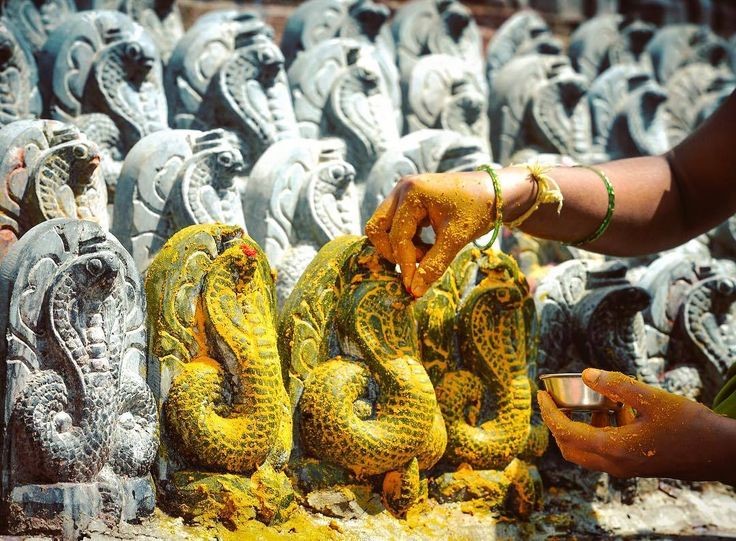
On Naga Panchami, devotees pay homage to Nagas by offering milk, turmeric, flowers, and prayers. Images or idols of serpents are adorned and worshipped, and some also create intricate designs known as Rangoli with rice flour depicting serpents. Special mantras and hymns are chanted to invoke the blessings of these powerful deities. In some regions, live cobras are worshipped and carried in processions as a mark of devotion.

Global Celebration and Adaptation
The reverence for Nagas isn’t confined to India alone. With the Indian diaspora spreading across the world, Naga Panchami has found its way into various cultures and communities. In countries like Nepal, Sri Lanka, and Indonesia, where Hinduism has a historical presence, Naga Panchami is celebrated with enthusiasm. Moreover, the festival’s universal themes of protection, transformation, and ecological balance have resonated with people from diverse backgrounds.

In places like Mauritius, Fiji, and Trinidad and Tobago, where Indian traditions have been preserved, Naga Panchami is celebrated with fervor. Communities come together to perform rituals, share traditional dishes, and educate the younger generation about the festival’s significance.

Ecological Significance and Conservation
The symbolism of serpents in Hinduism extends beyond mythology. Serpents play a crucial role in maintaining ecological balance by controlling rodent populations. Naga Panchami acts as a reminder of the importance of preserving these creatures and the ecosystems they inhabit. In recent times, efforts have been made to promote awareness about the conservation of snake species, as they often face threats due to habitat destruction and human fears.


Naga Panchami, with its roots in Hindu mythology and its global celebration, showcases the enduring influence of ancient traditions on contemporary society. The festival’s celebration serves as a bridge between cultural heritage and modern values, emphasizing the need to protect not only traditional practices but also the natural world. As communities across the world come together to venerate the serpent deities, Naga Panchami remains a testimony to the universality of spiritual ideals and the significance of unity in diversity.

Majestic Himalayas: A Journey Through Geographical Grandeur, Spiritual Significance, and Hidden Treasures


The Himalayas, a mesmerizing range of towering peaks and enchanting valleys, hold a timeless allure that transcends boundaries. Stretching across five countries – India, Nepal, Bhutan, China, and Pakistan – this majestic range is more than just a geographical wonder; it is a realm of spiritual awakening, cultural diversity, and unexplored mysteries. This article delves into the beauty of the Himalayas, exploring its geographical, religious, cultural, and spiritual importance, while uncovering its lesser-known, hidden gems.

Geographical Grandeur:

The Himalayas, often referred to as the “Abode of Snow,” form a formidable natural barrier separating the Indian subcontinent from the Tibetan Plateau. With an extensive range that spans approximately 1,500 miles, it boasts over 50 peaks above 23,600 feet, including the world’s highest peak, Mount Everest. This geological marvel influences climate patterns, carving out river valleys and nurturing lush ecosystems. The beauty of the Himalayas lies in its breathtaking landscapes – from serene alpine meadows to rugged terrains, glistening glaciers, and meandering rivers.

Religious and Cultural Significance:

The Himalayas have long held a sacred place in the hearts of millions. This region is home to several religions, and it is often considered the spiritual epicenter of the world. For Hindus, the Himalayas house sacred shrines like Badrinath, Kedarnath, and Amarnath, while Buddhists revere it for being the birthplace of Siddhartha Gautama, who later became Gautama Buddha. The cultural diversity thrives in the Himalayas, with indigenous communities in Bhutan, Nepal, and India preserving their unique traditions and way of life. Festivals like the Hemis Festival in Ladakh and the Paro Tsechu in Bhutan showcase the vibrant tapestry of the region’s cultures.

Spiritual Awakening:

The Himalayas offer a serene environment conducive to spiritual growth and self-discovery. Yogis and spiritual seekers have been drawn to its tranquil valleys for centuries. Renowned spiritual destinations like Rishikesh, known as the “Yoga Capital of the World,” provide the perfect backdrop for meditation and self-reflection. Many ashrams and monasteries nestled amidst the mountains offer solitude and a chance to connect with oneself and nature. The pristine surroundings, where the air is imbued with tranquility, inspire introspection and spiritual awakening.

Unexplored Treasures:

While the popular destinations in the Himalayas attract tourists from around the globe, the lesser-known, unexplored places hold their own charm. Places like Tirthan Valley in Himachal Pradesh, Pelling in Sikkim, and the Nubra Valley in Ladakh offer a more off-the-beaten-path experience. These hidden treasures provide an opportunity to immerse oneself in the raw beauty of nature, away from the bustling crowds. The less-trodden trails and pristine landscapes reveal the true essence of the Himalayas, allowing travelers to forge a deeper connection with this enchanting realm.

Preserving the Fragile Ecosystem:

The beauty of the Himalayas also calls for a responsible approach to tourism and environmental conservation. Rapid urbanization, unchecked construction, and waste disposal pose significant threats to the fragile ecosystem of the region. Sustainable tourism practices and community-based initiatives are essential to ensure that the natural beauty of the Himalayas remains intact for generations to come. Efforts to raise awareness about preserving the environment and promoting responsible tourism are crucial for maintaining the sanctity of this awe-inspiring region.

In conclusion, the Himalayas stand as a testament to the wonders of nature, the richness of culture, and the depth of spirituality. Its geographical grandeur, religious significance, cultural diversity, and unexplored treasures make it a destination like no other. As travelers and enthusiasts venture into this mystical expanse, it is imperative that we approach it with reverence, respect, and a deep sense of responsibility. The Himalayas are not just a physical landscape; they are a reflection of the human spirit’s quest for connection, exploration, and meaning amidst the vastness of the universe.

Design a site like this with WordPress.com
Get started