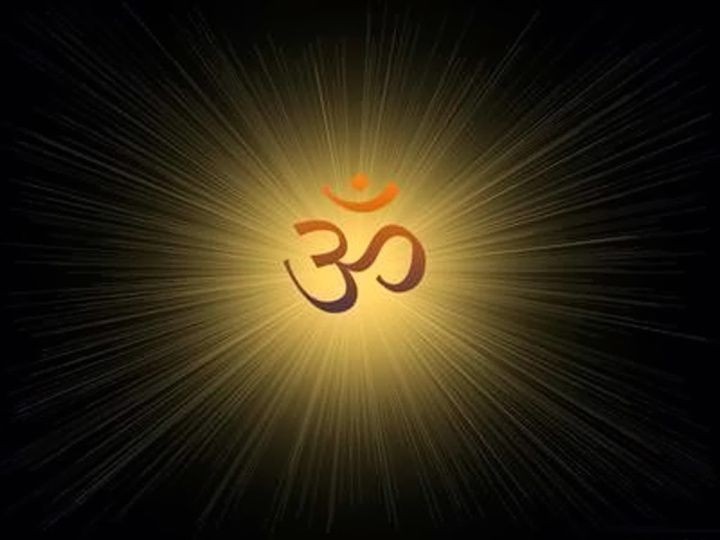
In the vast expanse of the cosmos, a timeless vibration reverberates through space and time, encapsulating the essence of existence itself. This eternal sound, known as “OM,” is often referred to as the sound of the universe, a sacred syllable that resonates with profound significance in various spiritual and philosophical traditions. From ancient scriptures to modern scientific exploration, the resonance of OM carries within it a tapestry of meaning that transcends cultures, languages, and disciplines, connecting us to the very fabric of creation.
**The Origins of OM:**
The origins of OM can be traced back to ancient Indian spiritual and philosophical texts, particularly the Vedas. In Hinduism, OM is considered a primordial and divine sound, symbolizing the ultimate reality, the unmanifested source from which all existence arises. It is often depicted as a three-part syllable: A-U-M, with each part representing different aspects of reality. “A” symbolizes creation, “U” symbolizes preservation, and “M” symbolizes destruction or transformation. The silence that follows the chanting of OM represents the fourth state, known as “Turiya,” which transcends the cycle of creation, preservation, and destruction.
**OM in Spiritual Practices:**
Chanting OM is a common practice in various spiritual disciplines, including Hinduism, Buddhism, Jainism, and Sikhism. The resonance of the sound is believed to align one’s consciousness with the divine, facilitating meditation, introspection, and connection with higher states of awareness. The rhythmic intonation of OM is thought to resonate not only within the individual but also throughout the cosmos, symbolizing the interconnectedness of all beings.
**OM in Modern Science:**
Beyond its spiritual significance, OM has also captured the curiosity of modern science. The vibration and resonance of the universe are subjects of study in fields like cosmology and physics. While the direct translation of OM into scientific terms may be complex, the fundamental idea of a universal vibration aligns with the concept of cosmic background radiation—the faint afterglow of the Big Bang. This cosmic hum, discovered in the mid-20th century, is believed to be the oldest detectable signal in the universe and is often metaphorically referred to as the “sound” of the Big Bang.
**The Harmony of OM:**
OM’s resonance carries a unique harmony that extends beyond cultural and spiritual boundaries. Just as different musical notes combine to create a melodious composition, OM’s three syllables combine to create a harmonious sound that encompasses the cyclical nature of existence. This harmony reflects the interconnectedness of life, the cycles of birth, growth, and transformation that are central to the human experience.
**OM in Sound Therapy:**
The healing potential of sound is a subject of increasing interest in the realm of holistic wellness. Sound therapy, also known as sound healing, utilizes vibrations and frequencies to promote relaxation, reduce stress, and enhance well-being. OM’s resonance, often used as a focal point in sound therapy practices, is believed to balance and align the body’s energy centers, or chakras, promoting a sense of harmony and vitality.
**OM in Philosophy:**
Beyond its role as a mere sound, OM encapsulates profound philosophical insights. In Advaita Vedanta, a non-dualistic school of Indian philosophy, OM represents the unity of the individual soul (Atman) with the ultimate reality (Brahman). It signifies the realization that all apparent distinctions are illusory, and the true nature of existence is a singular consciousness that transcends form and division.
**The Quest for Cosmic Harmony:**
The universal resonance of OM invites us to ponder the nature of harmony in a world often characterized by complexity and discord. It reminds us that beneath the surface of diverse experiences and expressions lies a unifying thread that connects all life forms. Just as the vibrations of OM create a symphony that transcends the individual notes, our collective journey through existence is an intricate interplay of unique melodies that together compose the grand tapestry of the universe.
In conclusion, OM—the sound of the universe—is a profound symbol that transcends cultural, spiritual, and scientific boundaries. From its origins in ancient texts to its echoes in modern cosmology, OM resonates as a reminder of the interconnectedness of all existence. Whether chanted during meditation, contemplated in philosophical discourse, or studied in scientific exploration, the resonance of OM invites us to attune ourselves to the cosmic symphony that underlies the fabric of reality, uniting us with the eternal vibration of creation.

 Bharat Chronicles - Navigating Politics, Heritage and Beyond